
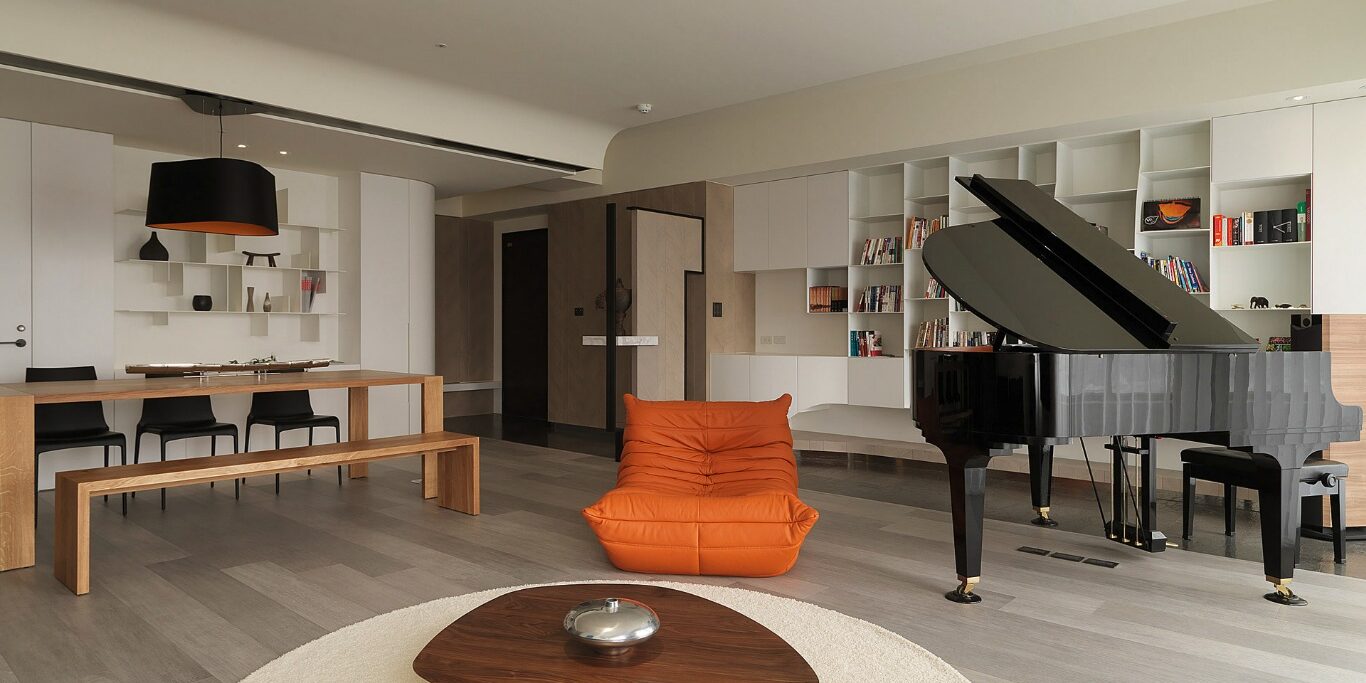
There’s a way a baby grand piano fills a room.
Not just with sound, but with presence. The curve of the lid. The way light catches the finish. The resonance you feel in your chest when you press a chord and let it ring.
You've probably walked past one in a hotel lobby or a friend's apartment and thought: what would it be like to have one of those? Maybe you put it off. “That’s too much piano for me.” Or “later, when I have more money” or “when I’m a better player,” or otherwise find a reason not to.
But getting a baby grand is a lot closer and easier than you think. Let's talk about what it actually costs - and how to make it happen.
What Baby Grands Actually Cost
Let’s take a quick look at the field. New baby grand pianos fall into three tiers:
$12,000 to $20,000 - Quality instruments from established makers like Young Chang, Weber, Yamaha, Kawai, Essex or Pearl River frequently can’t be found for less than $20k. A new Young Chang Y152A (5' baby grand) runs around $15,000. These are real pianos with solid spruce soundboards, Abel hammers from Germany, and Roslau strings. They'll last generations with proper care.
$20,000 to $40,000 - Japanese-made models and premium Asian builds with refined voicing and action. The Boston GP-156 (designed by Steinway, built by Kawai in Indonesia) sits here at around $26,000, you’ll also find names like Yamaha and Schimmel (made in China) in this range.
$40,000 to $90,000+ - The storied names: Steinway, Mason & Hamlin, Bechstein. A Steinway Model S lists around $89,000.
A word on cost: Brands like Young Chang, Weber and anything above that are all made from quality premium parts and materials. The main difference in price is the labor. A Yamaha is put together by unionized factory workers in Japan, who are more expensive than non-union workers in China and Indonesia. Contrast that with how much it costs in Astoria, Queens in New York to put together a piano. But all pianos are made the same way - they involve a lot of labor by hand. Hence the costs due to labor in developed economies.
Used pianos cost 40-60% less, but condition varies wildly. A 15-year-old Yamaha in good shape might theoretically run $8,000-$10,000, but on the open market: you’ll be lucky to get $5000 for a Yamaha you bought two years ago. We get this phone call almost every day. Older or lesser-known brands can go for $3,000-$5,000, but budget extra for servicing to bring them into shape, and you’re at a real risk of getting a lemon. We get that phone call too, and no, we don’t want to buy it. Sorry.
So when you ask "how much does a baby grand piano cost," the answer is "it depends" - and the range is so broad it almost makes the question meaningless.
Maybe a better question is: what would it take to get a baby grand piano in my home?
Here's where most guides stop.
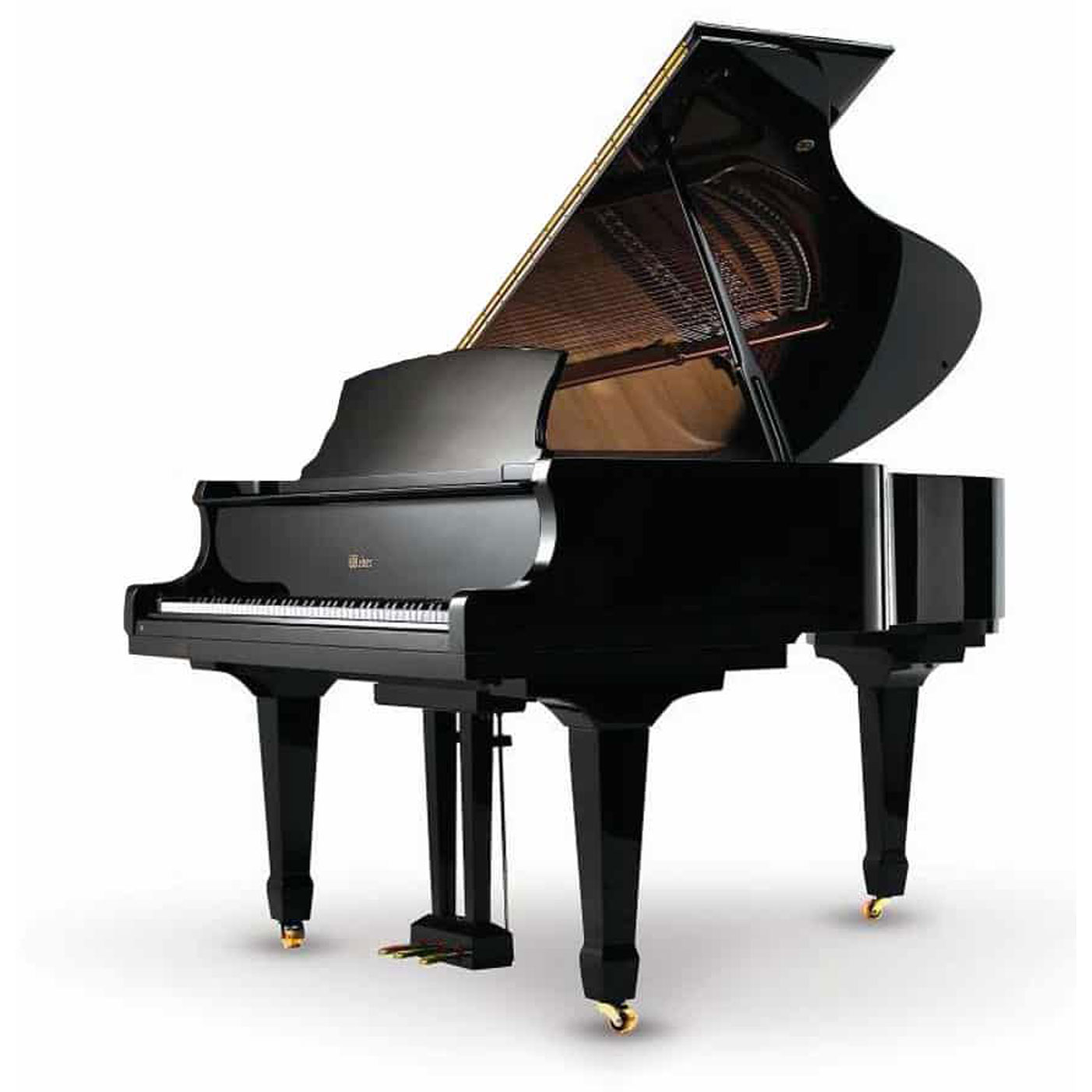
A baby grand isn't like buying a couch. It's 500+ pounds of wood, iron, and precision engineering that needs ongoing care:
- Tuning: $200-$325, twice a year. Non-negotiable if you want it to sound right and last a lifetime.
- Climate control: New York apartments swing from dry winter heat to humid summers, and it’s those swings that affect tuning. A humidity control system runs $400-$600 installed. Or just stay up to date on regular tuning.
- Delivery: $500-$1,000+ depending on stairs and building access.
The math: That $15,000 piano actually costs you north of $20,000 over five years when you add it all up. And if you decide to sell? Expect to get back maybe half of what you paid - if you can find a buyer at all, or manage to close the deal. Check Craigslist sometime. Free pianos sit unclaimed because nobody wants to move them.
These days people are more mobile than they used to be. You think you'll be in your place forever, then you get transferred or promoted. Your family grows and you find your dream house in the suburbs. Your child develops a major musical talent and you have to move to Florida so they can go to a specific high school. So many reasons you might move sooner than you think. Life just happens.
Why lock yourself into that if you don’t have to? There is a better solution for players (and homes!) of all kinds.
A Better Way to Start
At PianoPiano, a baby grand rents for $265 to $395 a month depending on the model. Simple terms, no five-figure check.
You get a quality instrument - Young Chang, Weber, Yamaha, Kawai and other premium piano brands - delivered to your home. We've been doing this for 50 years, three generations of the same family, and we’re not going anywhere. We've put thousands of baby grands into apartments, townhouses, and living rooms across the Northeast and Southern California.
So live with it. Play it. Find out if piano is going to be part of your life and if this piano is the right one for you.
If your situation changes - you move, the kids lose interest, you decide you’d rather have an upright or a larger grand - call us. We'll swap it or pick it up. No worrying about selling it, letting strangers into your home. Just peace of mind.
Tuning is required twice yearly at $175 per session - less than if you owned your piano because we’re able to give volume to our technicians and pass the savings on to you. But you're never inheriting someone else's years of skipped maintenance or mystery damage.
We know where every one of our pianos has been and how often they’ve been tuned since they came out of the factory or the refurbishing shop. Plus, if something goes wrong we’re right here to help you. Look, we’re a rental company - we plan to own these pianos for a very long time - it's in our interest to make sure we buy high quality instruments that will last forever and make sure they are properly maintained.
And here's the thing: if you fall in love and decide to buy, we won’t stop you. 100% of your first year's rent applies toward the purchase price. Rent a Young Chang baby grand at $395/month for a year, and you've built up $4,740 toward buying it. Then pay the balance over the next 12 months with 0% interest. So really, you have two years to pay for your piano with no interest.
The purchase price is guaranteed at the time you rent and will never go up even though the prices in stores go up every year. On top of that, we guarantee the lowest purchase prices out there for our Young Chang and Weber pianos. That's because we're not only a rental company but also the importer and distributor of all our pianos - we cut out the middle man and pass the savings onto the customer.
This isn't rent-to-own. There's no obligation to buy - ever. It's rent, then own if you want to. Or keep renting for as long as you want - there’s no time limit and your rental price will never increase.
Where We Deliver
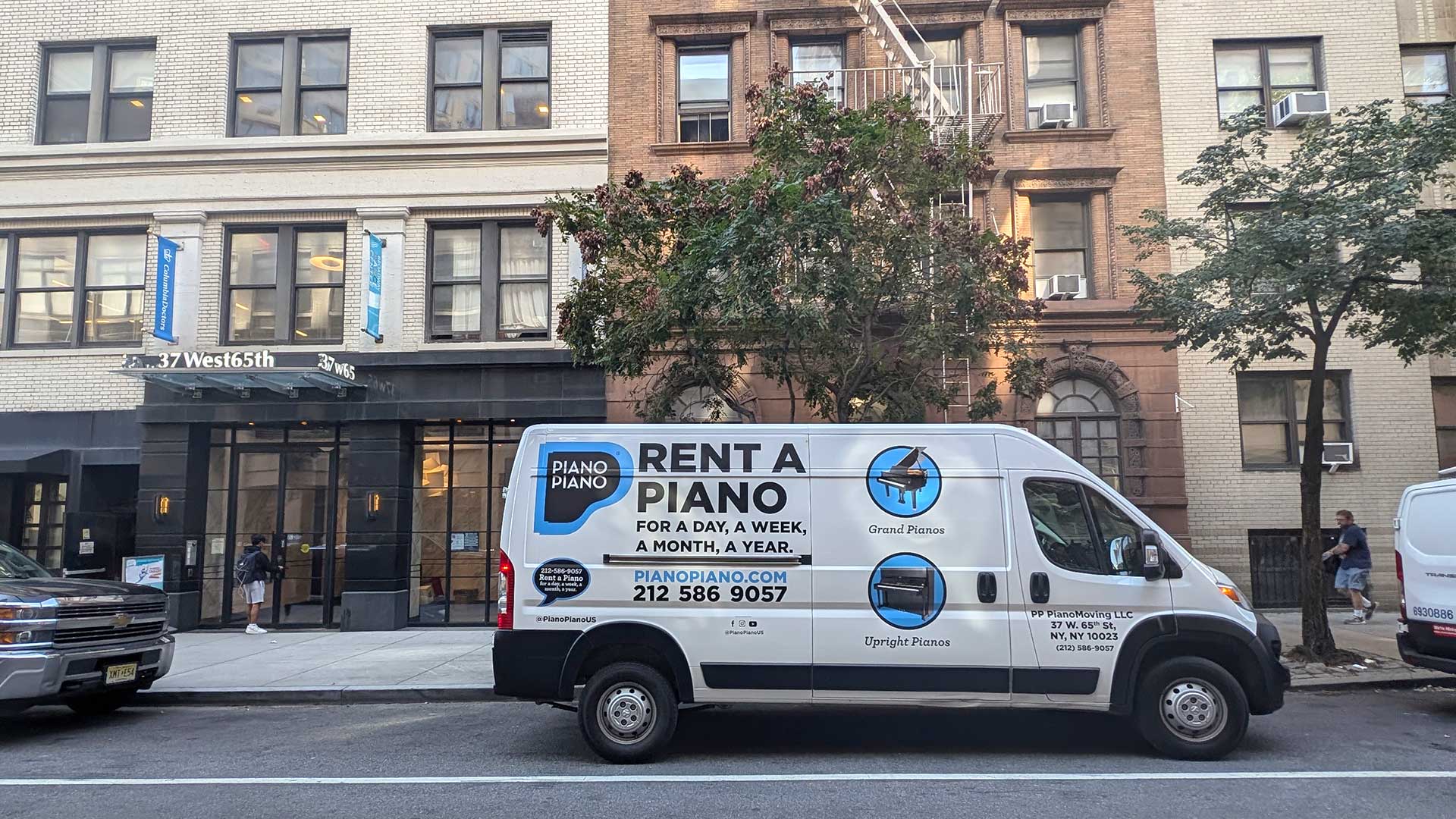
PianoPiano's service area spans the entire Northeast corridor from Boston to Washington DC, plus all of Southern California from our Fullerton showroom. That's over 73 million people we can reach.
Our NYC showroom is on the Upper West Side, across the street from Lincoln Center and Juilliard. Come play a few. No pressure. (We wear jeans here, not suits.) And if you need a teacher, we can help you find that too. We have teachers we work with throughout our service area and can recommend someone who is right for your skill level.
Still Want to Buy?
Some folks don't need a trial run. If you’re ready to buy outright, we love that too. Young Chang and Weber - our sister company - sells baby grands directly at distributor pricing. No showroom markup. Same family. Same expertise. Just focused on purchase instead of rental.
Browse pianos for sale at YoungChangandWeber.com
The Bottom Line
A new baby grand costs $12,000 to $90,000 depending on brand. Factor in tuning, climate control, delivery, and eventual depreciation, and you're looking at a serious, long-term investment.
If you're certain about that commitment, buying can be a great choice.
But if you want to start playing now and decide later, renting gets you there faster - with less risk and more flexibility.
Either way, you end up with a baby grand piano that’s yours to play and enjoy for as long as you want it.
Ready to bring one home?